
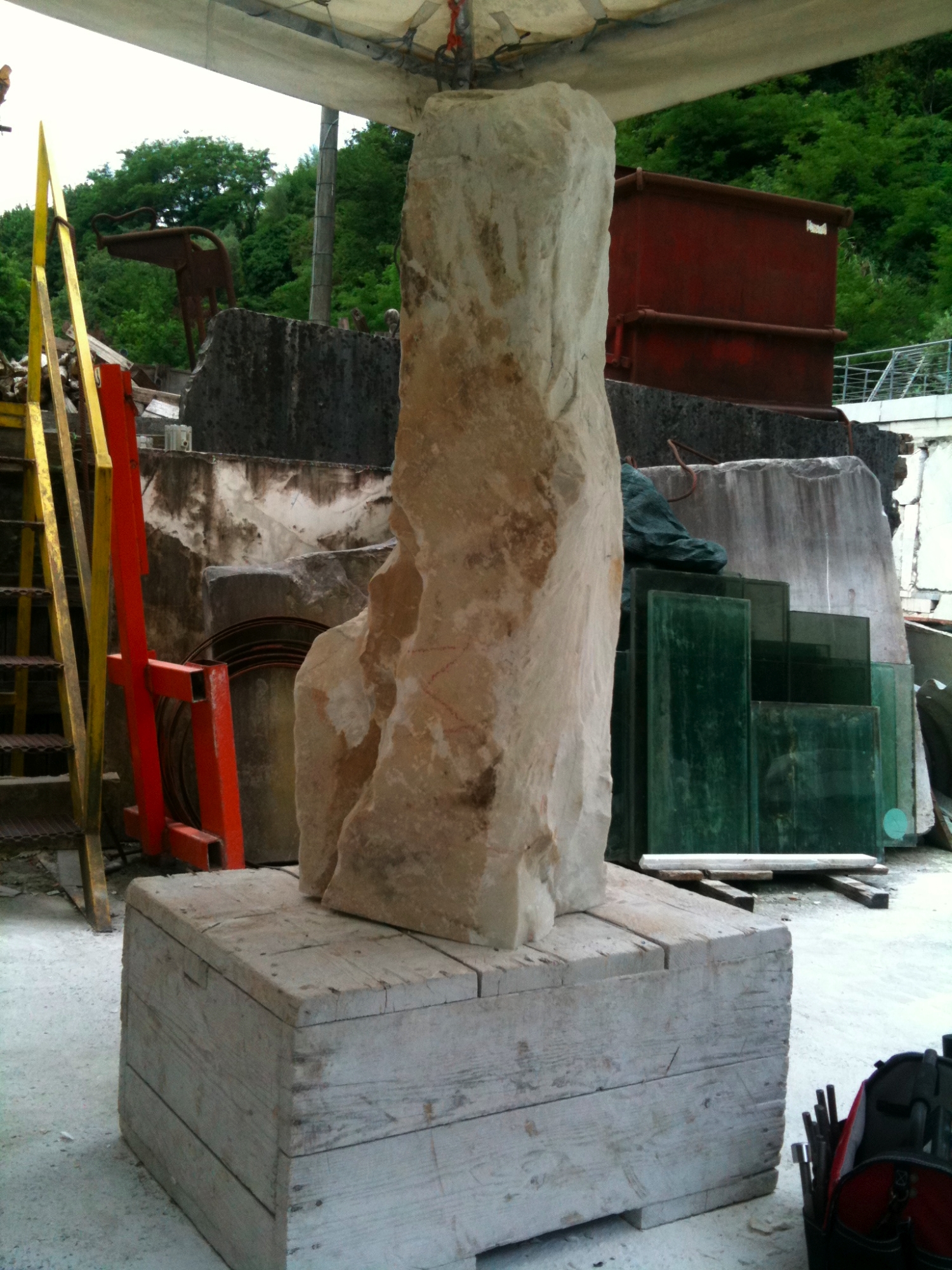
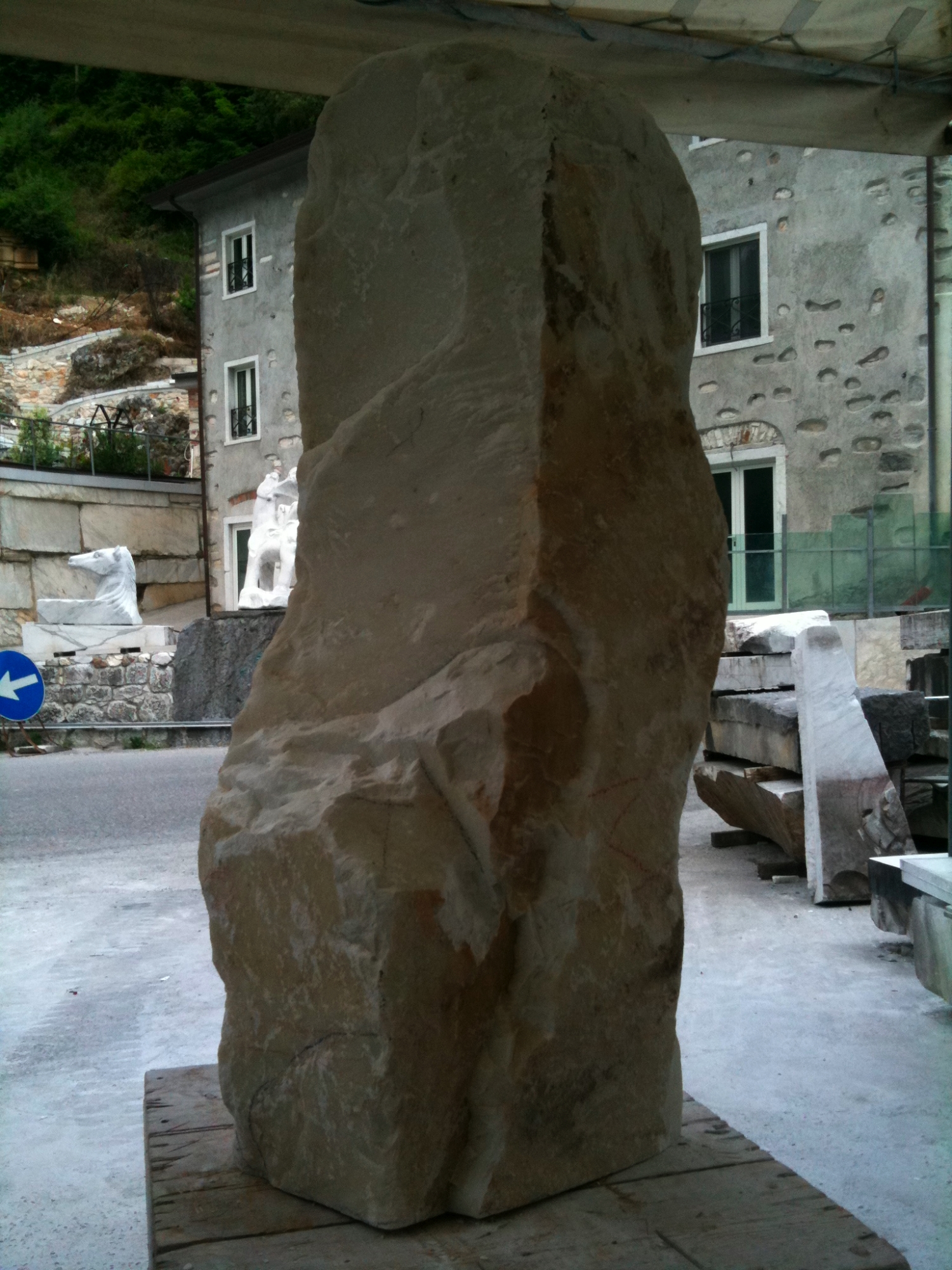
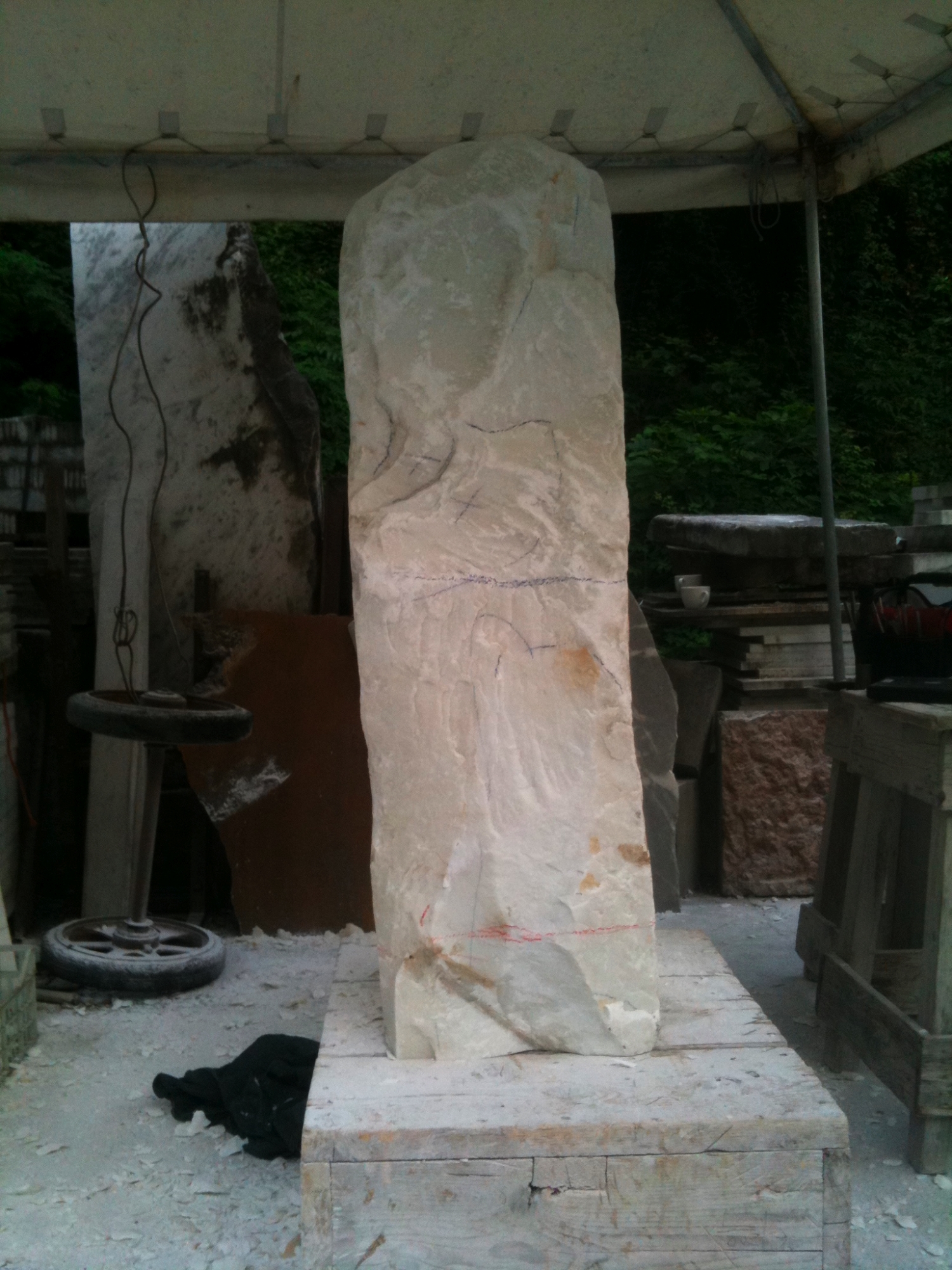
Otter arrived in the mountains of Carrara, just below the marble quarries, above the small town called Massa. Above the town, massive blocks of marble were pulled from the mountain and brought down by machinery — blocks destined to be shipped all over the world. This was Michelangelo Statuario marble, the finest marble on earth. Exceptionally white, translucent, incredibly tight in granulation, and capable of rendering detail like no other.
According to Otter, you can hear the quality of marble before you ever sculpt it. By running a chisel along the surface, you can listen — the sound tells you if the stone is tight, alive, and trustworthy, or if there is a weak section that must be removed.
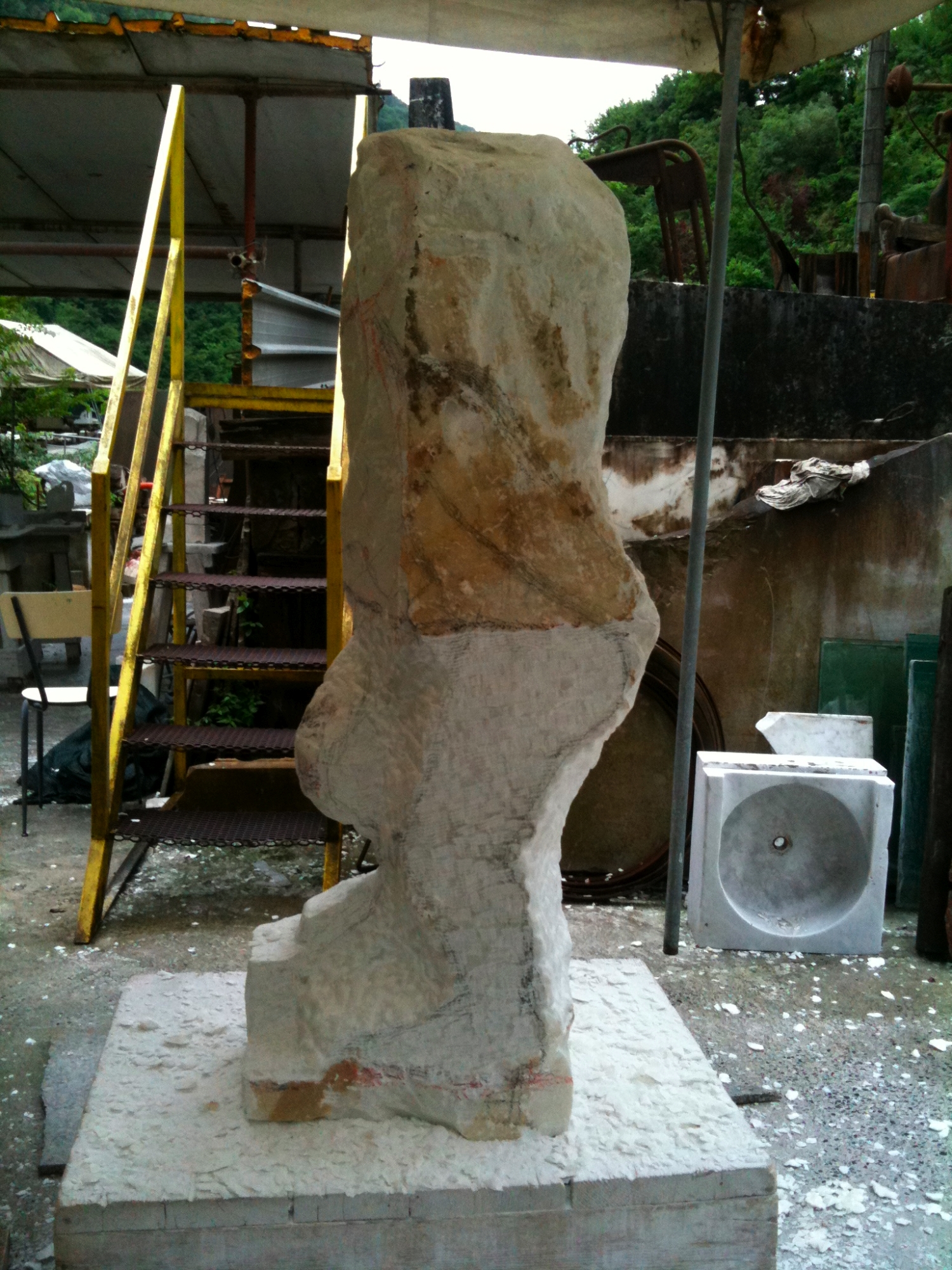
These markings show Otter’s first conversation with the stone. The crossed-out areas were not drawings of what he planned to make, but decisions about what could not remain. Material that had to be removed before the sculpture could begin to breathe.
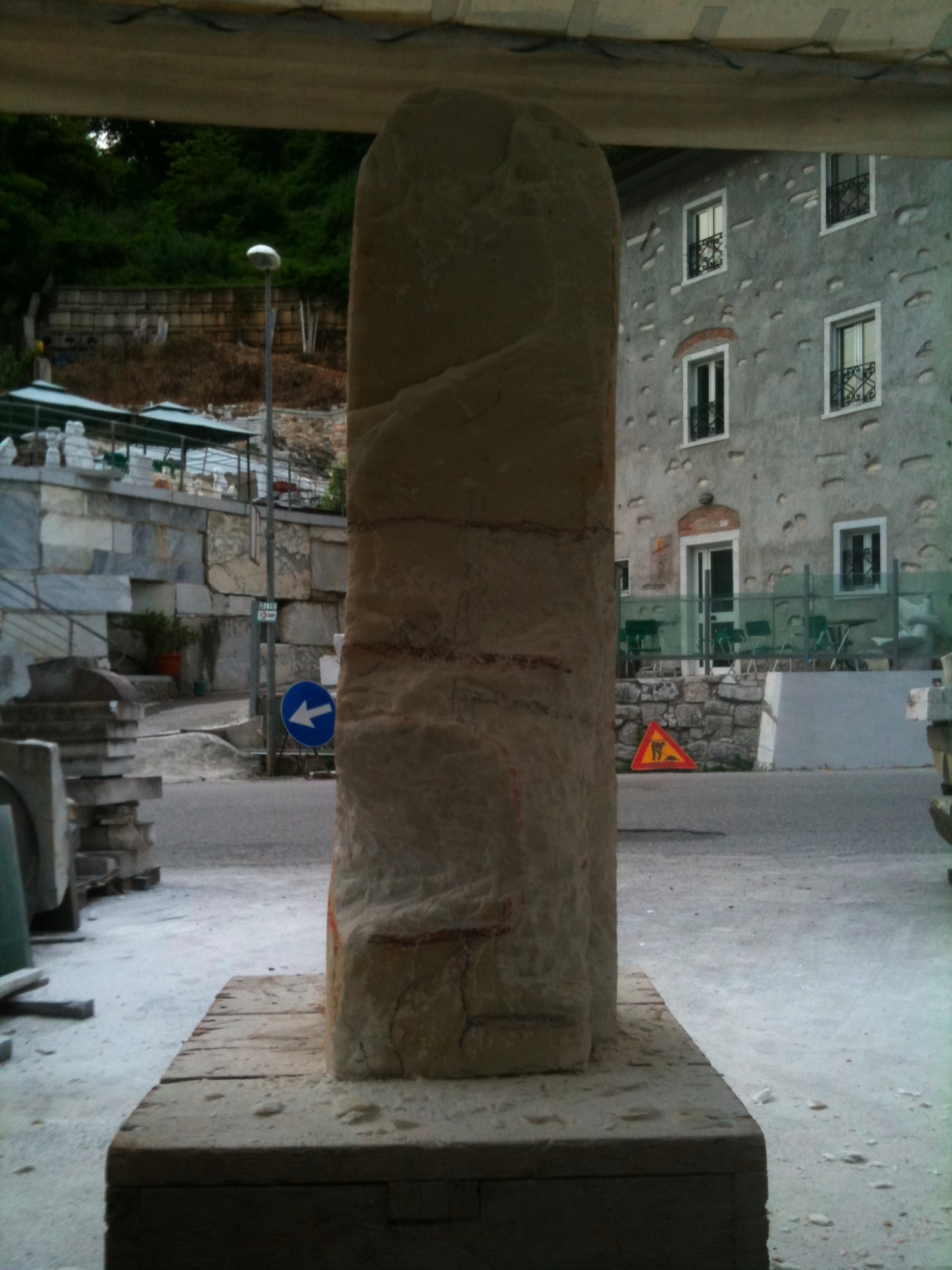
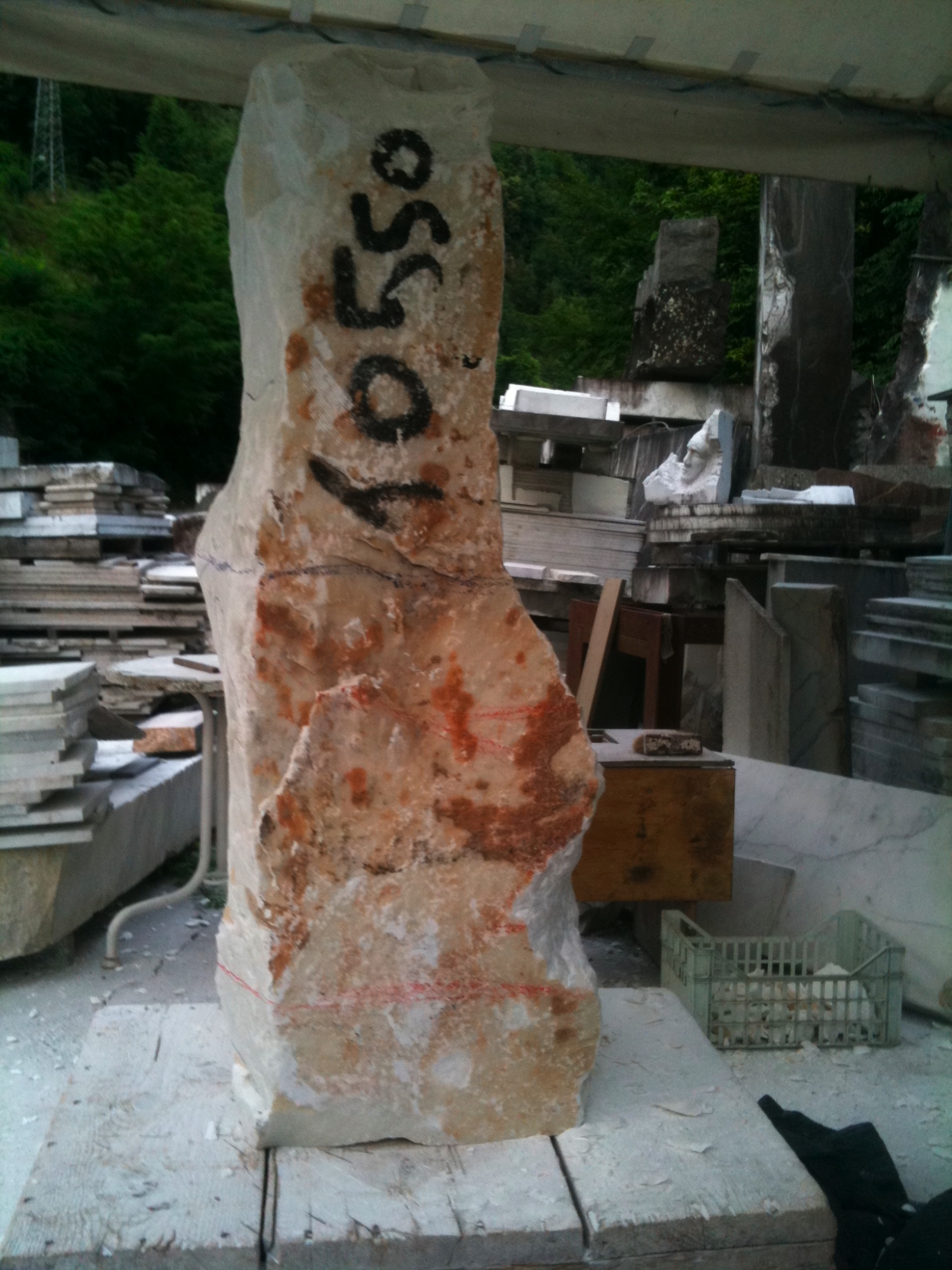
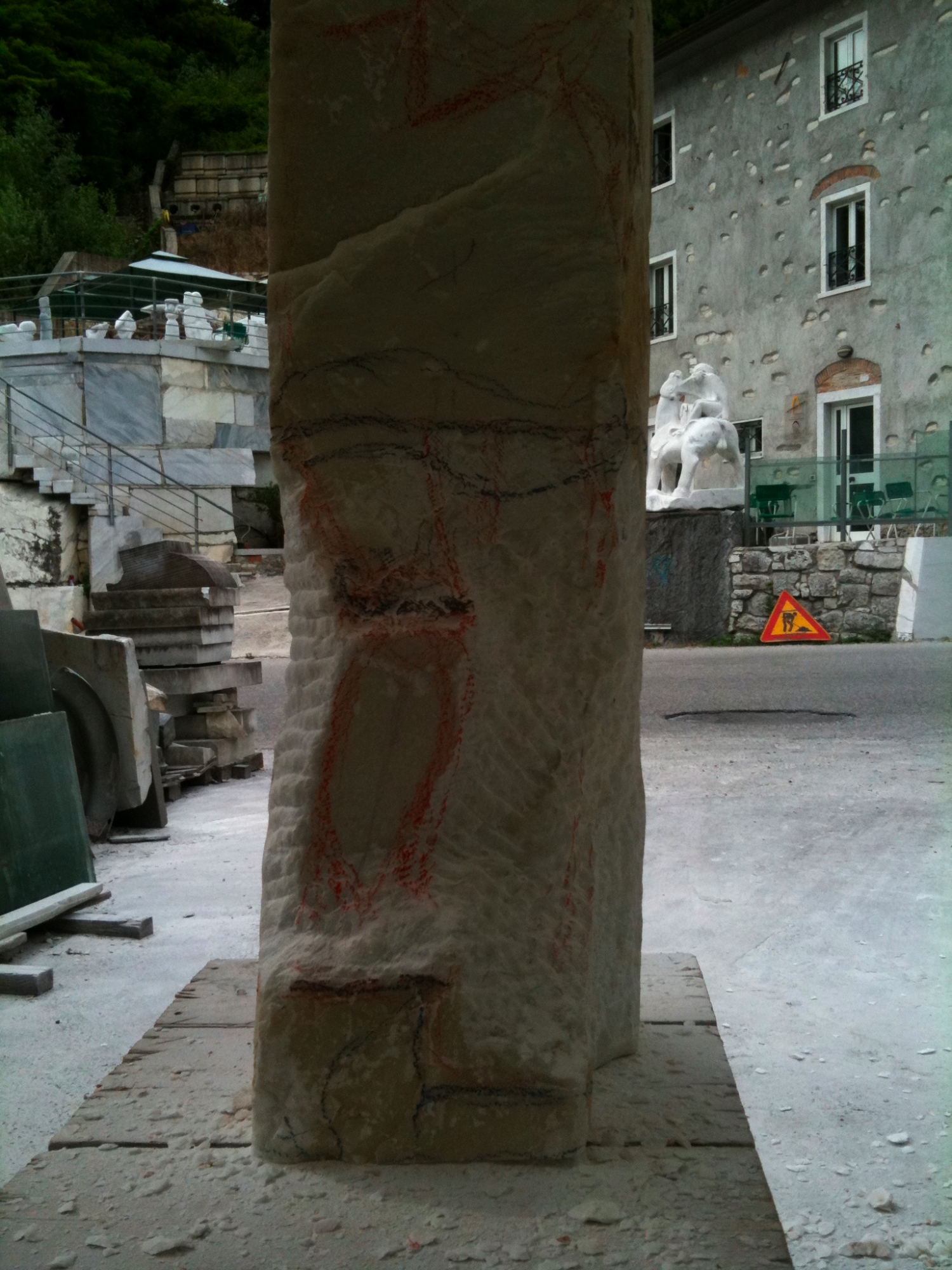
Turning the block reveals its full mass — nearly half a ton of raw marble. At this stage, the stone is unchanged, still carrying the mountain within it. This was the exact material taken from the same quarries where Michelangelo selected his stone.
Before Otter ever struck the block, he was given a history lesson. He was introduced to the quarry owners, taught where the marble came from, how it was chosen, and why this stone mattered. He was shown how Michelangelo listened to the marble, how he tested it, how he respected it, and why he loved it.
Otter bought the block knowing exactly what it represented. This was not just a material purchase — it was an agreement to work under the same conditions, with the same resistance, and the same consequences as the masters before him.
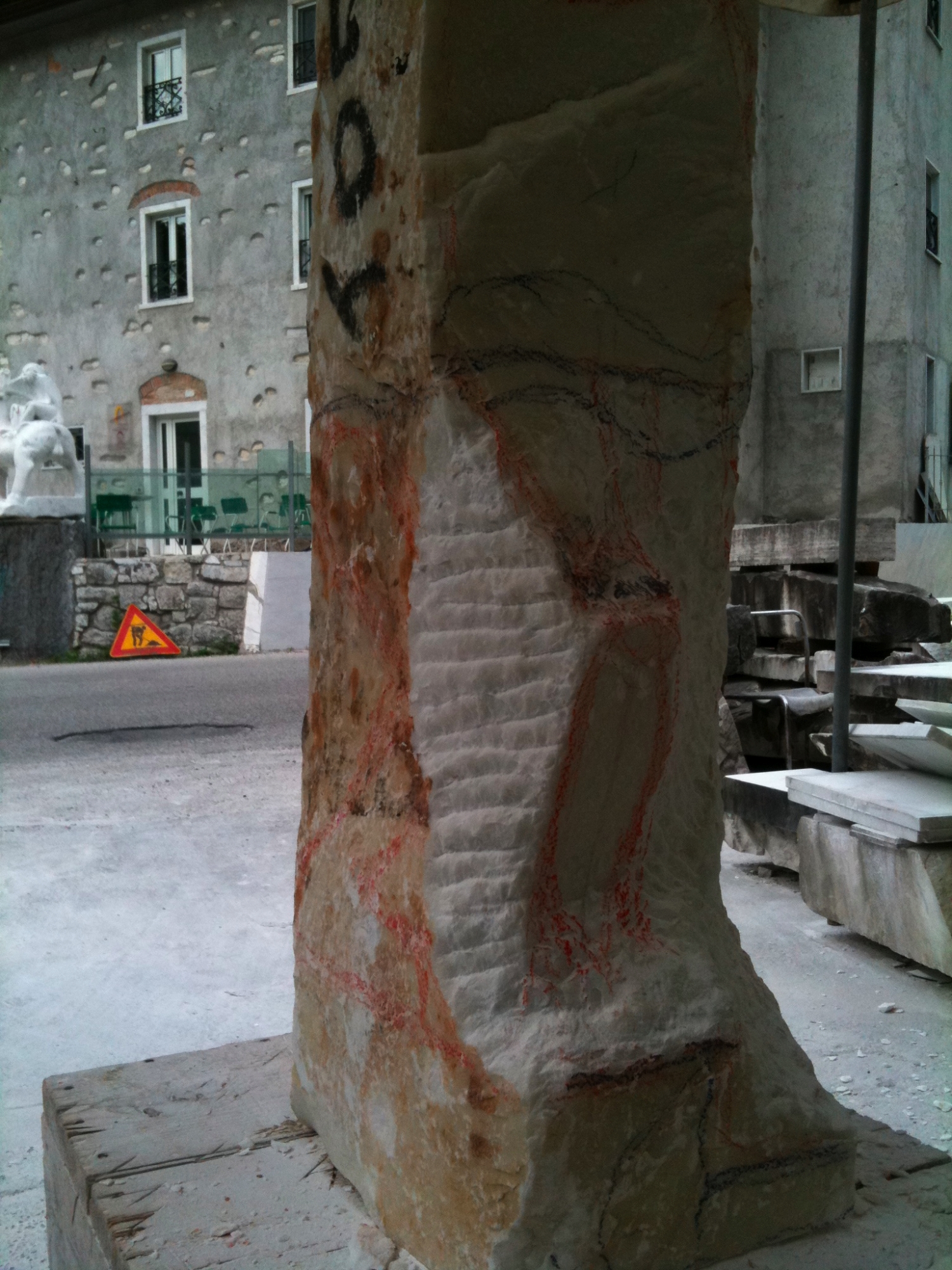
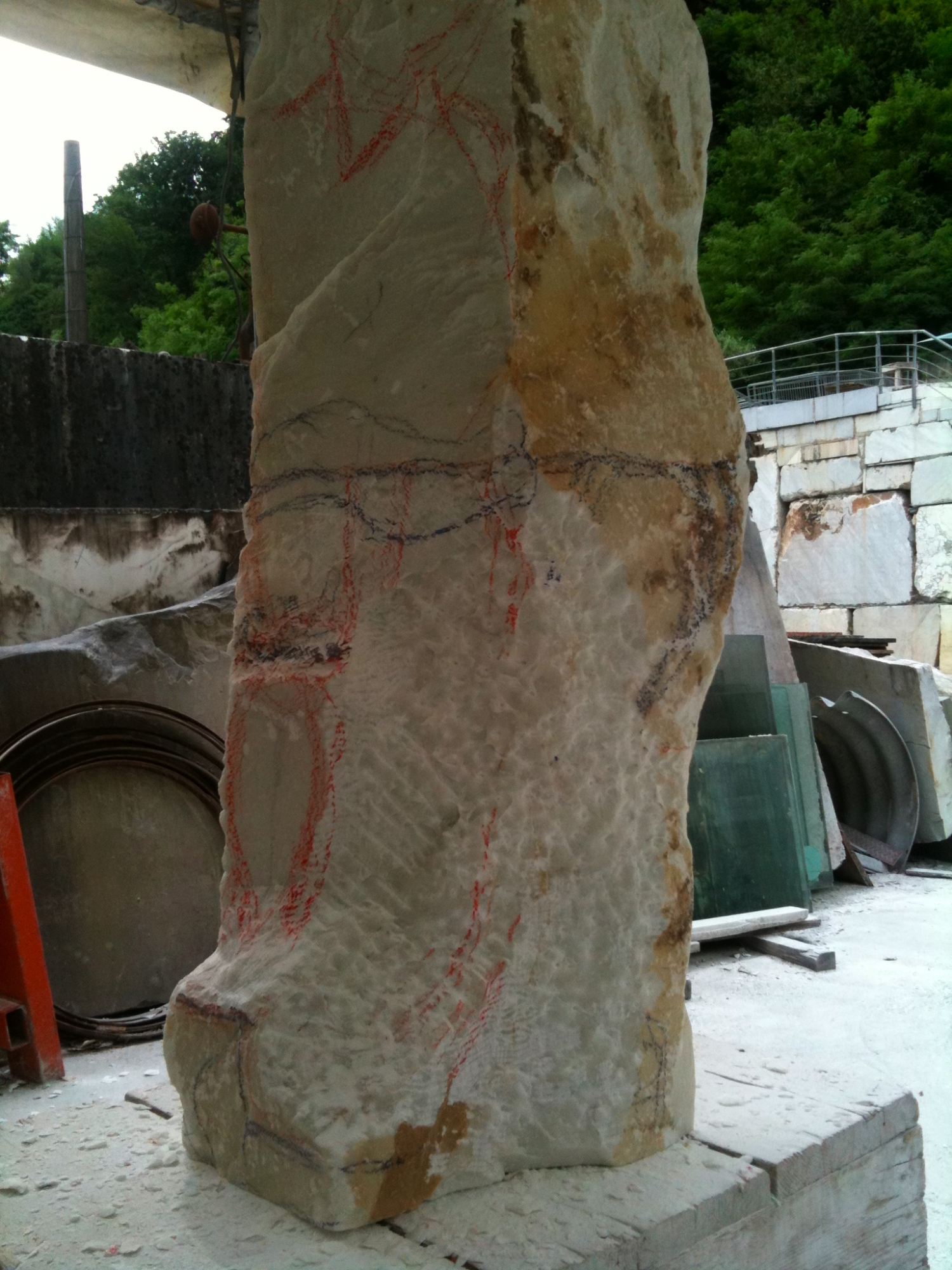
On the first day, Otter’s teacher handed him a hammer and a one-point chisel — the same tools Michelangelo used — and walked away.
No instruction. No demonstration.
What Otter did not know was that his teacher was watching from a balcony where he could not be seen. He wanted to know how badly Otter wanted this. He wanted to see what was inside him before offering anything.
Otter began striking the marble with everything he had. The stone was so hard that every blow demanded full force. He moved an abnormal amount of marble that day — far more than expected. By the end of the day, his fingers were split and bleeding.
He did not eat. He did not stop.
From dawn until dusk, Otter sculpted by hand until he was told to stop.
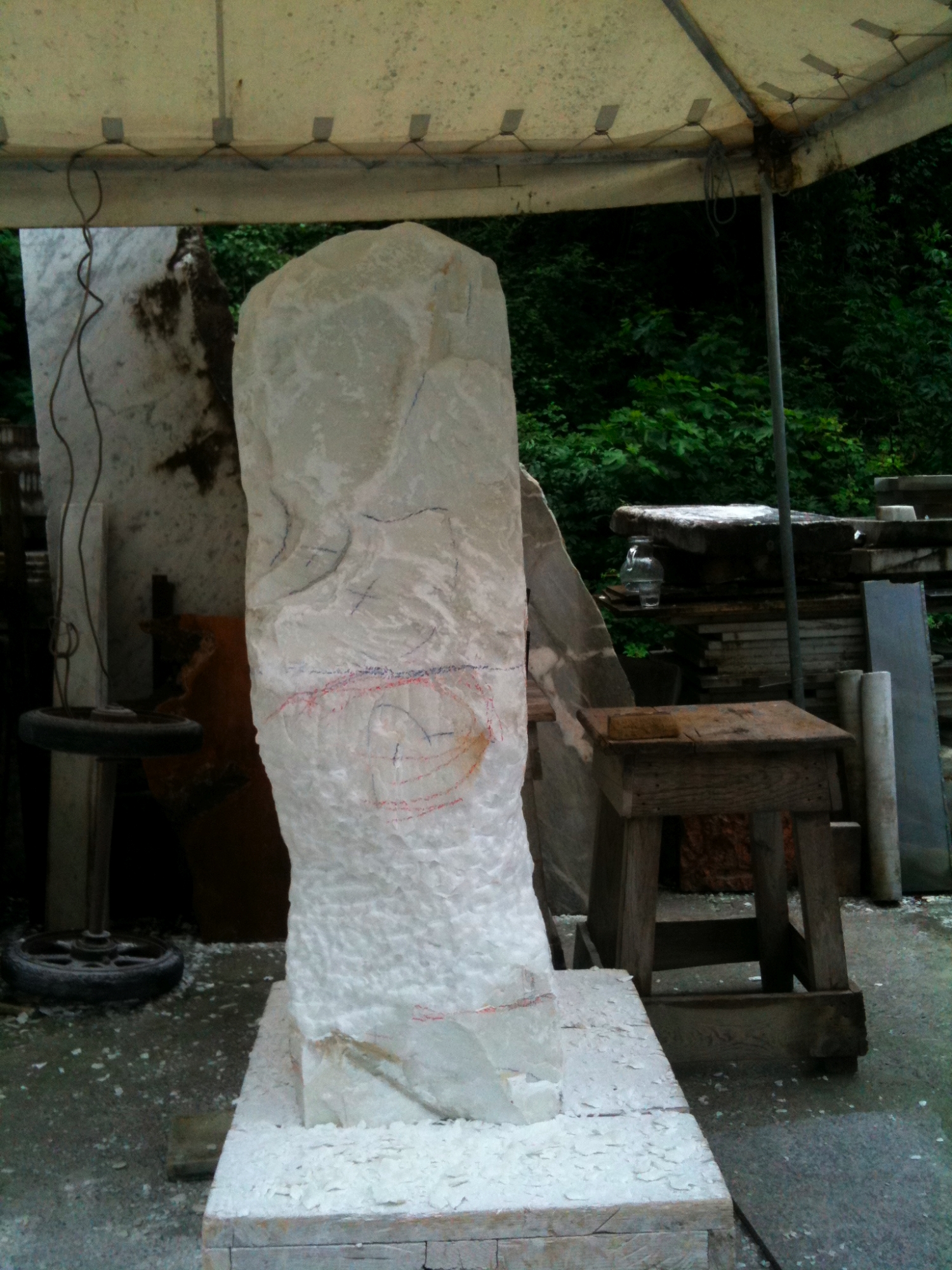
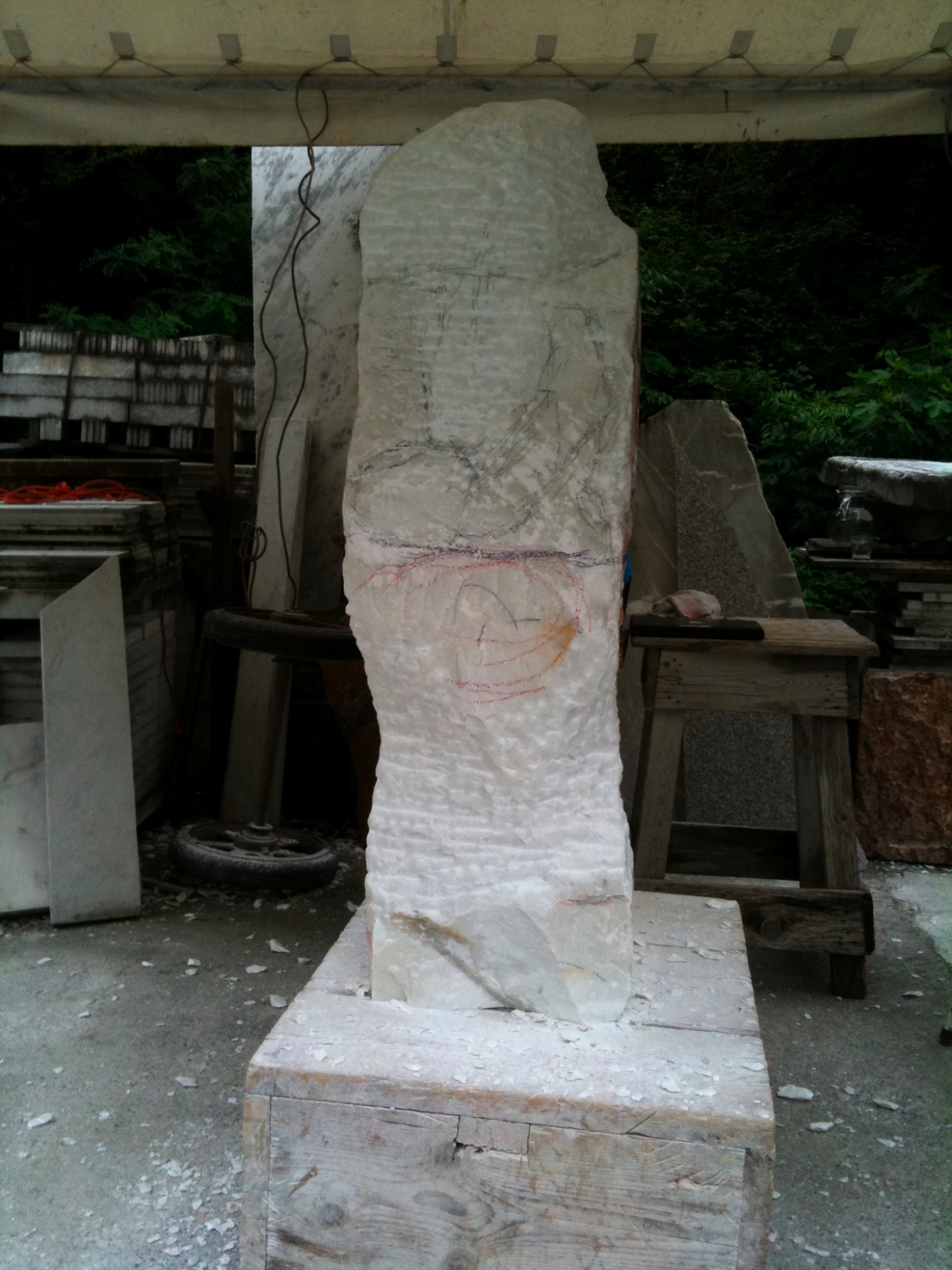
By the end of that first day, the block had already changed dramatically. Large sections of marble were gone, and the sculpture had begun to declare itself.
When his teacher returned, he said he had never seen anyone move that much marble on a first day — especially by hand. He agreed to teach Otter starting the next morning.
Otter told him he only had one chance. He wanted to learn the fundamentals of traditional sculpture — to start where Michelangelo started, to learn how he moved, how he thought, and how he felt while sculpting. He wanted to sculpt by hand, even though everyone else around him used pneumatic tools.
As the torso began to emerge, Otter deliberately avoided the face. The chest, shoulders, and structure took shape, but the head remained completely blank.
This hesitation was intentional.
Otter had visited the Louvre years earlier during a class trip to Paris. The first sculptures he sought out were Michelangelo’s The Dying Slave and The Rebellious Slave. The Rebellious Slave stayed with him — a block of marble that looked ready to explode with energy, unfinished yet alive.
His teacher explained the history of that sculpture, including Michelangelo’s struggle with the face — and the mistakes he feared repeating.
Otter was afraid to touch it.
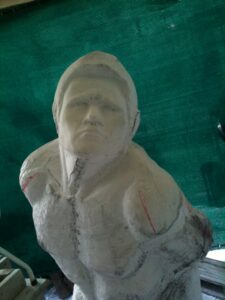
Eventually, Otter had no choice but to move forward. The sculpture demanded it.
He began working on the face — aware that once it started, there was no turning back. This was no longer technical labor. It was psychological.
Otter later admitted he was afraid for two reasons:
First, that he would mess it up and be forced to push everything back.
Second, that he didn’t know what face would appear.
He did not want to sculpt his own face. He did not want to look at himself.
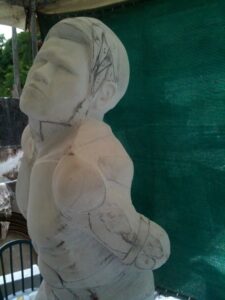
The face that emerged was his.
Otter hated it.
But that moment changed everything. The sculpture looked back at him and told him to stop being afraid — to sculpt, to show Italy why he was there, to show the world who he was. He had arrived without the language, without certainty, without knowing what he was doing — and now the stone was telling him it was time.
From that moment on, Otter was on fire.
Every day, there was something new to see. People began climbing the mountain to watch him work. His teacher had to put up lights at night and eventually tell people to leave so Otter could sleep.
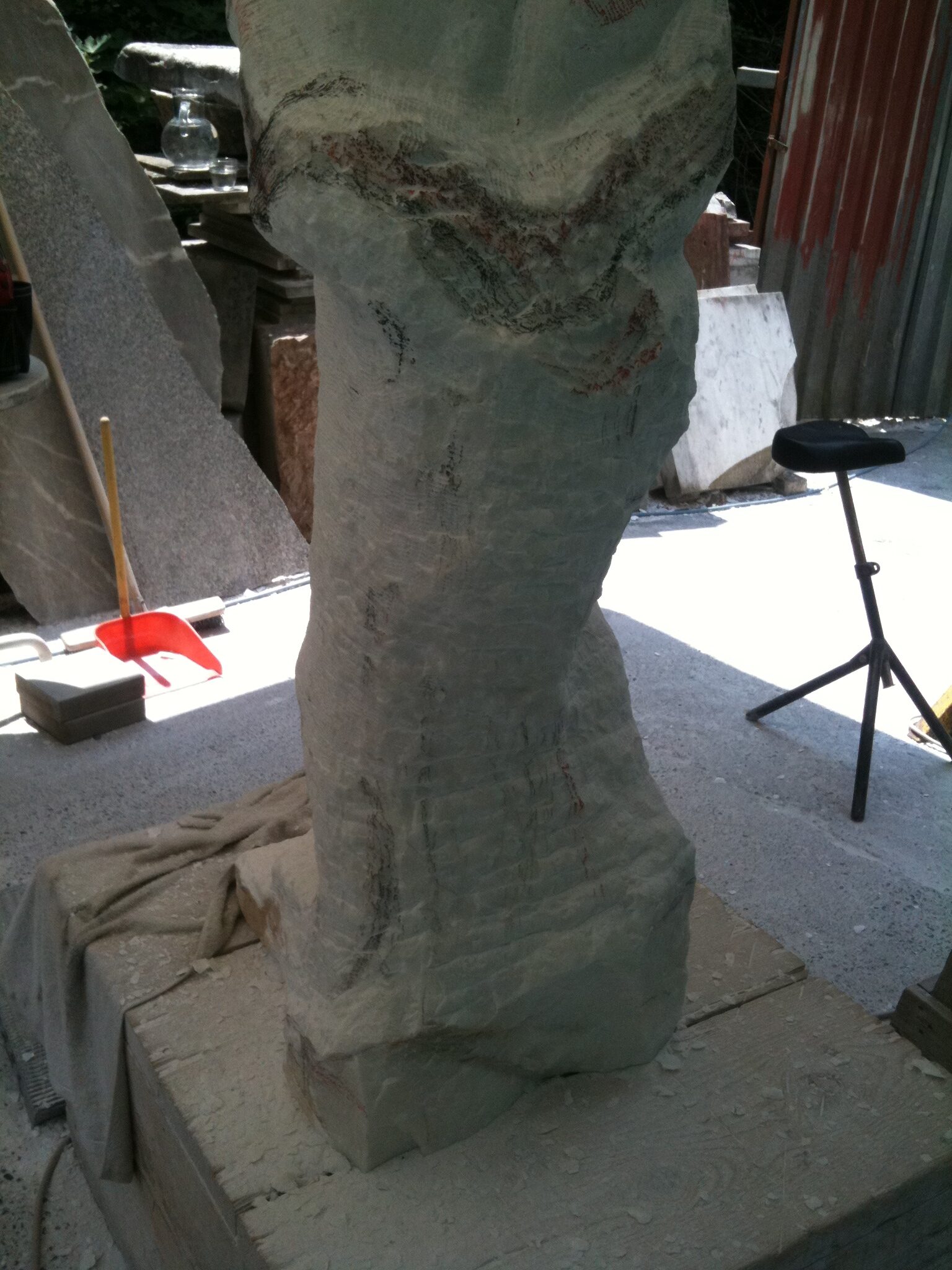
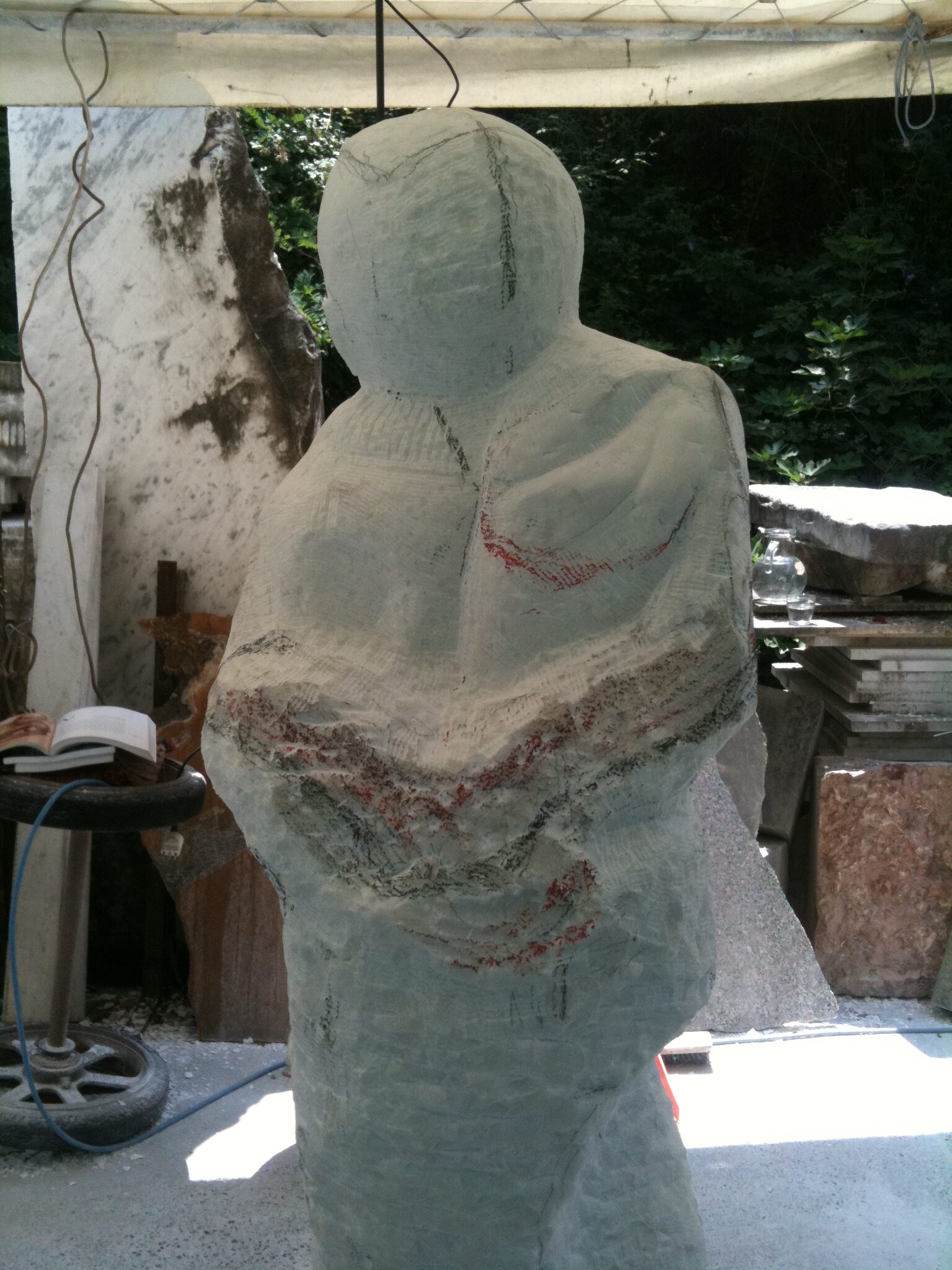
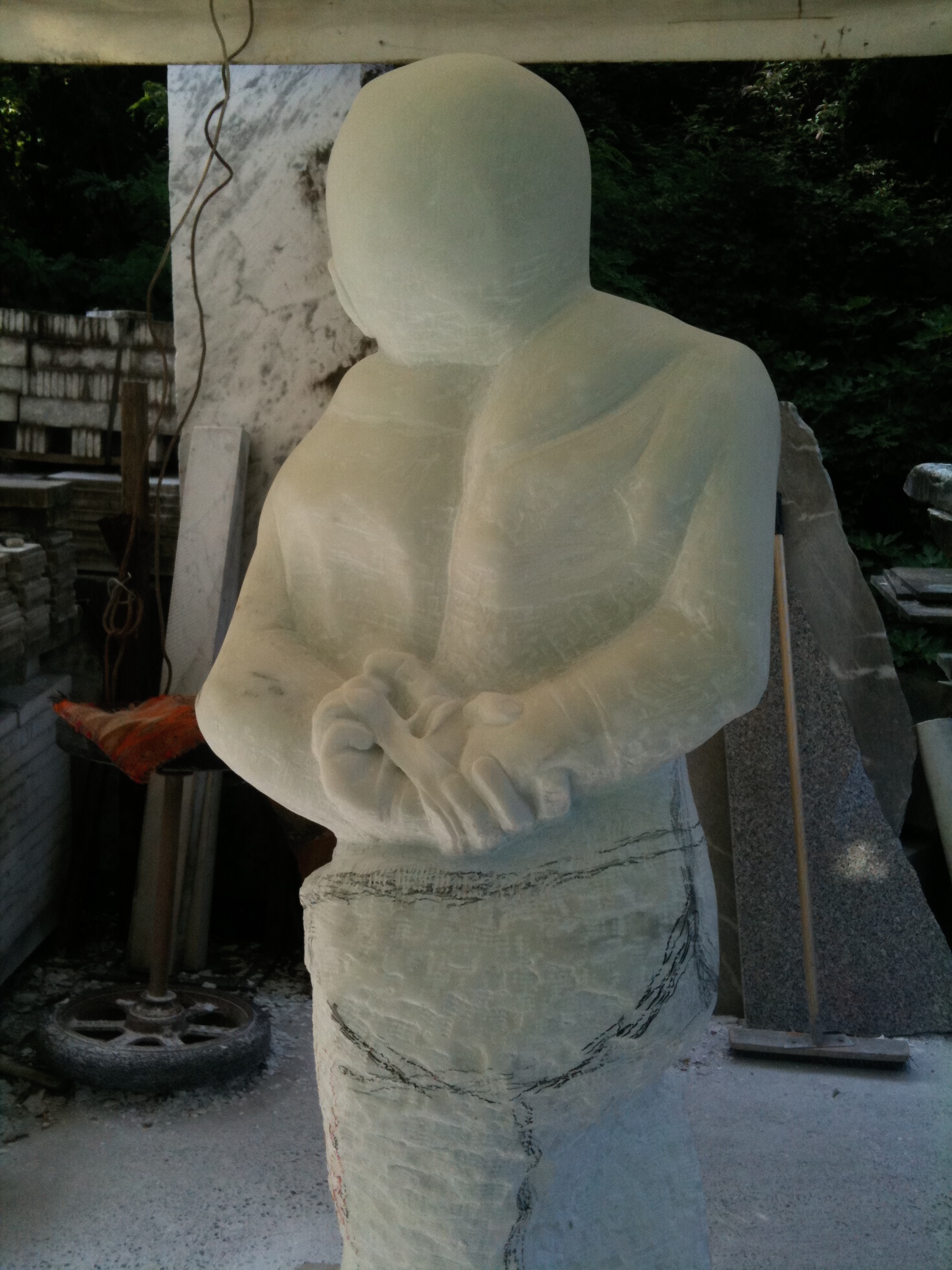
The back of the sculpture reveals the discipline behind the intensity, the same way Michelangelo would sculpt, front to back. Rough tool marks transition into smoother surfaces as Otter refined the form.
His teacher taught him not to bruise the stone — not to strike it head-on, but to remove marble at angles, polishing through subtraction. Otter learned how each tool behaved, how Michelangelo would have approached each mistake.
Other artists began to watch closely. Inspired by Otter’s commitment, some put down their pneumatic tools and tried sculpting by hand.
Otter was soaking his hands in salt water every morning to reduce swelling. He lived on corn flakes, boxed milk, and espresso. He lifted buckets of broken marble for exercise. Sculpting itself was brutal, but discipline was ingrained in him.
There was one traditional tool missing — a tool that no longer existed outside museums. Otter’s teacher knew of one man who might be able to make it.
The violin drill.
This video documents Otter using the last of its kind. It took him an entire day — from the moment he woke until he slept — to drill a single hole between the legs. Sharpening. Twisting. Sharpening again. A process unchanged for centuries.
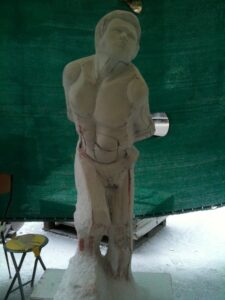
This is the sculpture as it stands today.
Unfinished — but powerful. The chest and torso carry deep refinement. The head holds weight and presence. Below the waist, the marble remains unfinished.
Otter stayed in Italy for months — as long as he possibly could. Eventually, his teacher stopped charging him and gave him a place to stay for free. Word had spread. People said Otter could do more in a day than others could do in a week.
Masters from around the world passed through the mountains. They were stunned to learn Otter had only been sculpting for eight weeks.
They called him the American-Italian Sculptor.
When his teacher finally inspected the finished work, he told Otter he was done. There was nothing left to teach. Otter had learned everything his teacher could give him.
Effective upon entry to this website
By accessing this website, you acknowledge and agree that all content displayed on Otter’s Renaissance — including but not limited to images, sculptures, artwork, designs, text, logos, and original concepts — are the exclusive intellectual property of Stephen “Otter” Otten, unless otherwise stated.
All artwork and content on this site is protected under United States and international copyright, trademark, and intellectual property laws.
You agree not to copy, download, reproduce, distribute, modify, display, publish, transmit, create derivative works from, or otherwise use any content or imagery from this website for commercial or non-commercial purposes without prior written consent from the artist.
You further agree not to use automated tools, scraping software, bots, or manual processes to extract images or content from this website.
Unauthorized use, reproduction, or distribution of any artwork or content may result in legal action.
By clicking “I Agree”, you acknowledge that you have read, understood, and agreed to these TERMS OF SERVICE as well as the COPYRIGHT AND USE AGREEMENT.